Active Directory Protocols
Kerberos, DNS, LDAP, MSRPC
Kerberos
Kerberos has been the default authentication protocol for domain accounts since Windows 2000. Kerberos is an open standard and allows for interoperability with other systems using the same standard. When a user logs into their PC, Kerberos is used to authenticate them via mutual authentication, or both the user and the server verify their identity.
Kerberos is a stateless authentication protocol based on tickets instead of transmitting user passwords over the network.
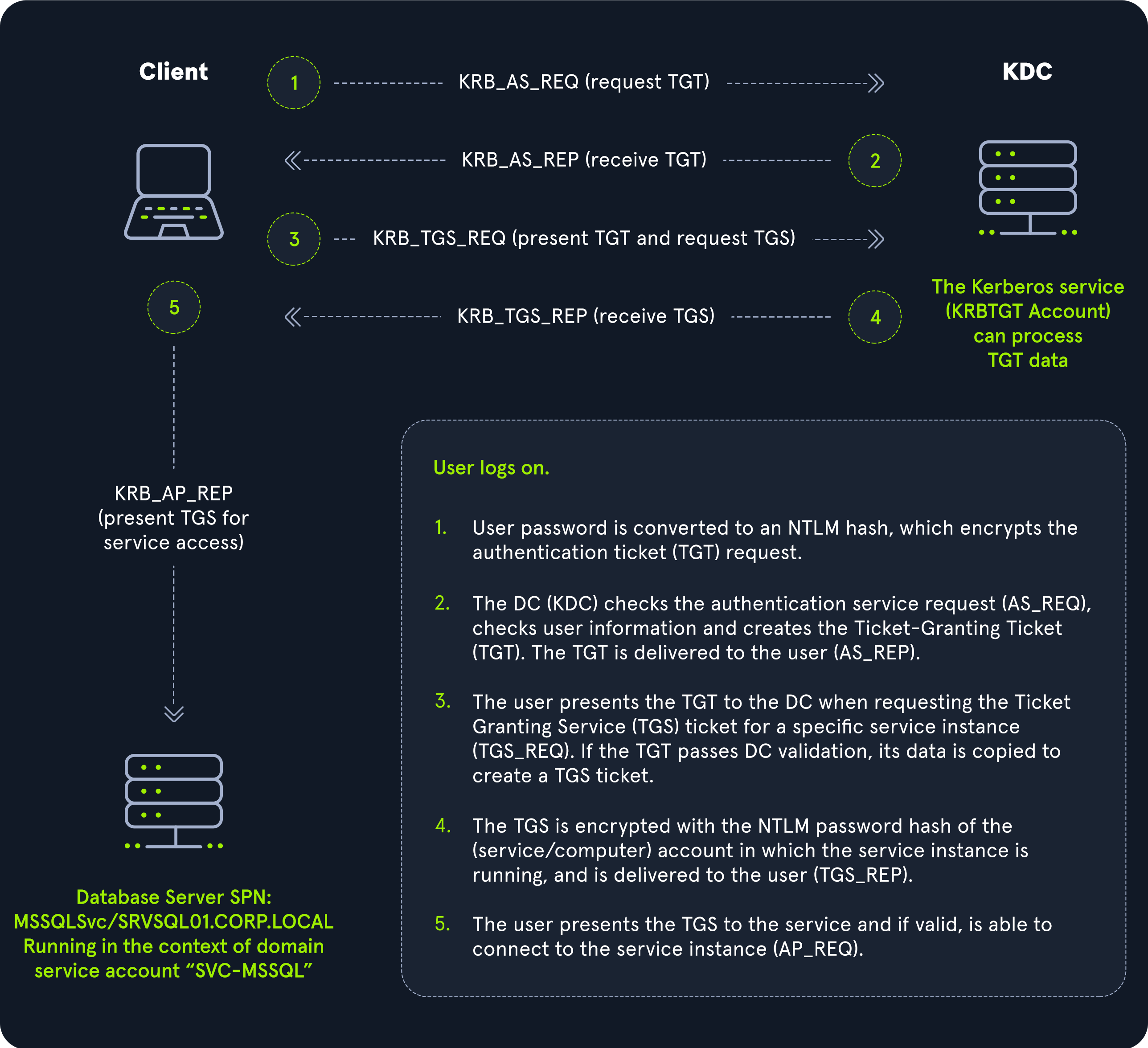
As part of Active Directory Domain Services (AD DS), Domain Controllers have a Kerberos Key Distribution Center (KDC) that issues tickets. When a user initiates a login request to a system, the client they are using to authenticate requests a ticket from the KDC, encrypting the request with the user’s password. If the KDC can decrypt the request (AS-REQ) using their password, it will create a Ticket Granting Ticket (TGT) and transmit it to the user. The user then presents its TGT to a Domain Controller to request a Ticket Granting Service (TGS) ticket, encrypted with the associated service’s NTLM password hash. Finally, the client requests access to the required service by presenting the TGS to the application or service, which decrypts it with its password hash. If the entire process completes appropriately, the user will be permitted to access the requested service or application.
Kerberos Authentication Process
- When a user logs in, their password is used to encrypt a timestamp, which is sent to the Key Distribution Center (KDC) to verify the integrity of the authentication by decrypting it. The KDC then issues a Ticket-Granting Ticket (TGT), encrypting it with the secret key of the krbtgt account. This TGT is used to request service tickets for accessing network resources, allowing authentication without repeatedly transmitting the user’s credentials. This process decouples the user’s credentials from requests to resources.
- The KDC service on the DC checks the authentication service request (AS-REQ), verifies the user information, and creates a Ticket Granting Ticket (TGT), which is delivered to the user.
- The user presents the TGT to the DC, requesting a Ticket Granting Service (TGS) ticket for a specific service. This is the TGS-REQ. If the TGT is successfully validated, its data is copied to create a TGS ticket.
- The TGS is encrypted with the NTLM password hash of the service or computer account in whose context the service instance is running and is delivered to the user in the TGS_REP.
- The user presents the TGS to the service, and if it is valid, the user is permitted to connect to the resource (AP_REQ).
DNS
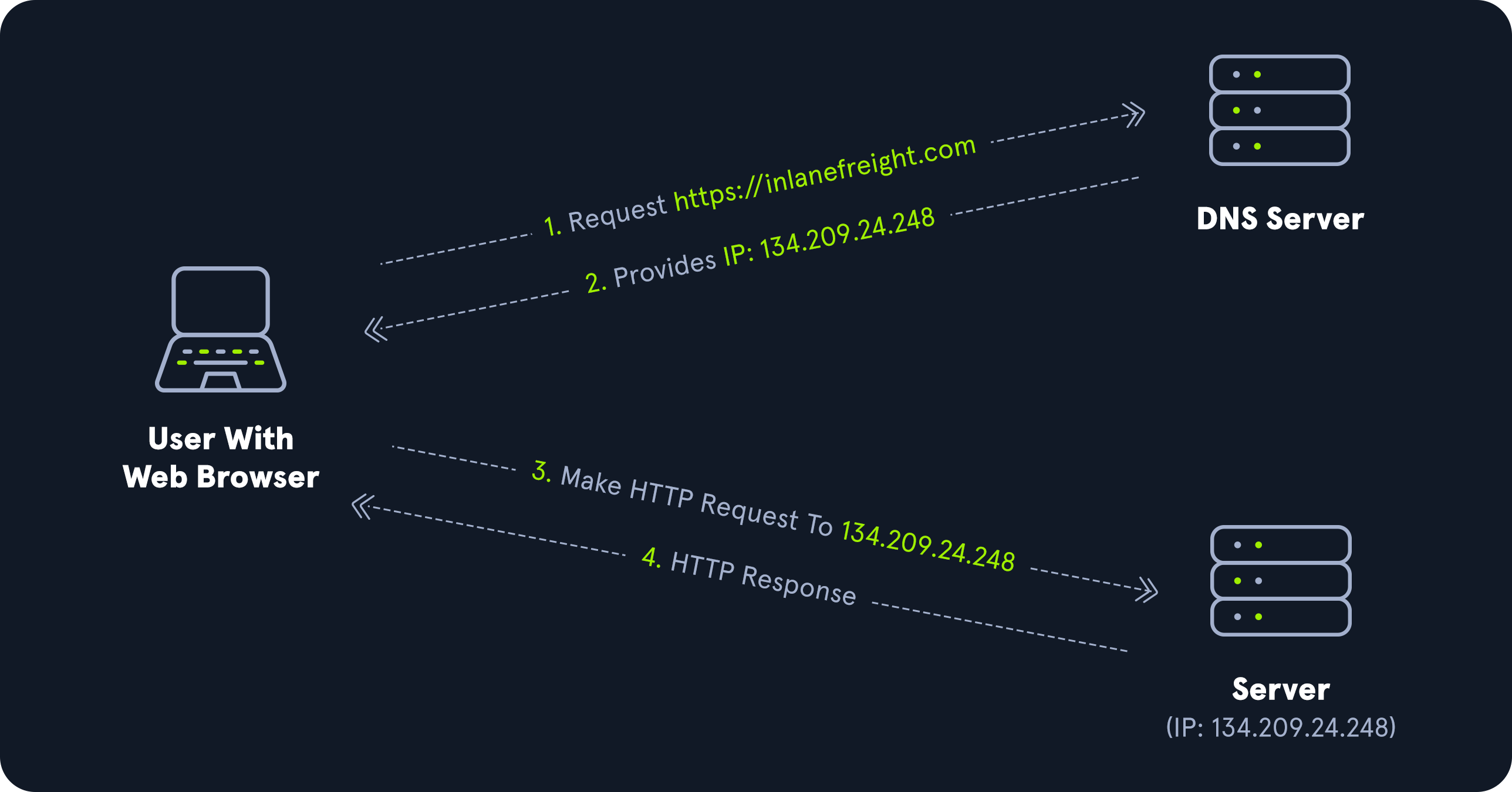
Active Directory Domain Services (AD DS) uses DNS to allow clients (workstations, servers, and other systems that communicate with the domain) to locate Domain Controllers and for Domain Controllers that host the directory service to communicate amongst themselves. DNS is used to resolve hostnames to IP addresses and is broadly used across internal networks and the internet.
Forward DNS Lookup
PS C:\htb> nslookup INLANEFREIGHT.LOCAL

Server:  172.16.6.5
Address:  172.16.6.5

Name:    INLANEFREIGHT.LOCAL
Address:  172.16.6.5
Reverse DNS Lookup
PS C:\htb> nslookup 172.16.6.5

Server:  172.16.6.5
Address:  172.16.6.5

Name:    ACADEMY-EA-DC01.INLANEFREIGHT.LOCAL
Address:  172.16.6.5
Finding IP Address of a Host
PS C:\htb> nslookup ACADEMY-EA-DC01

Server:   172.16.6.5
Address:  172.16.6.5

Name:    ACADEMY-EA-DC01.INLANEFREIGHT.LOCAL
Address:  172.16.6.5
LDAP
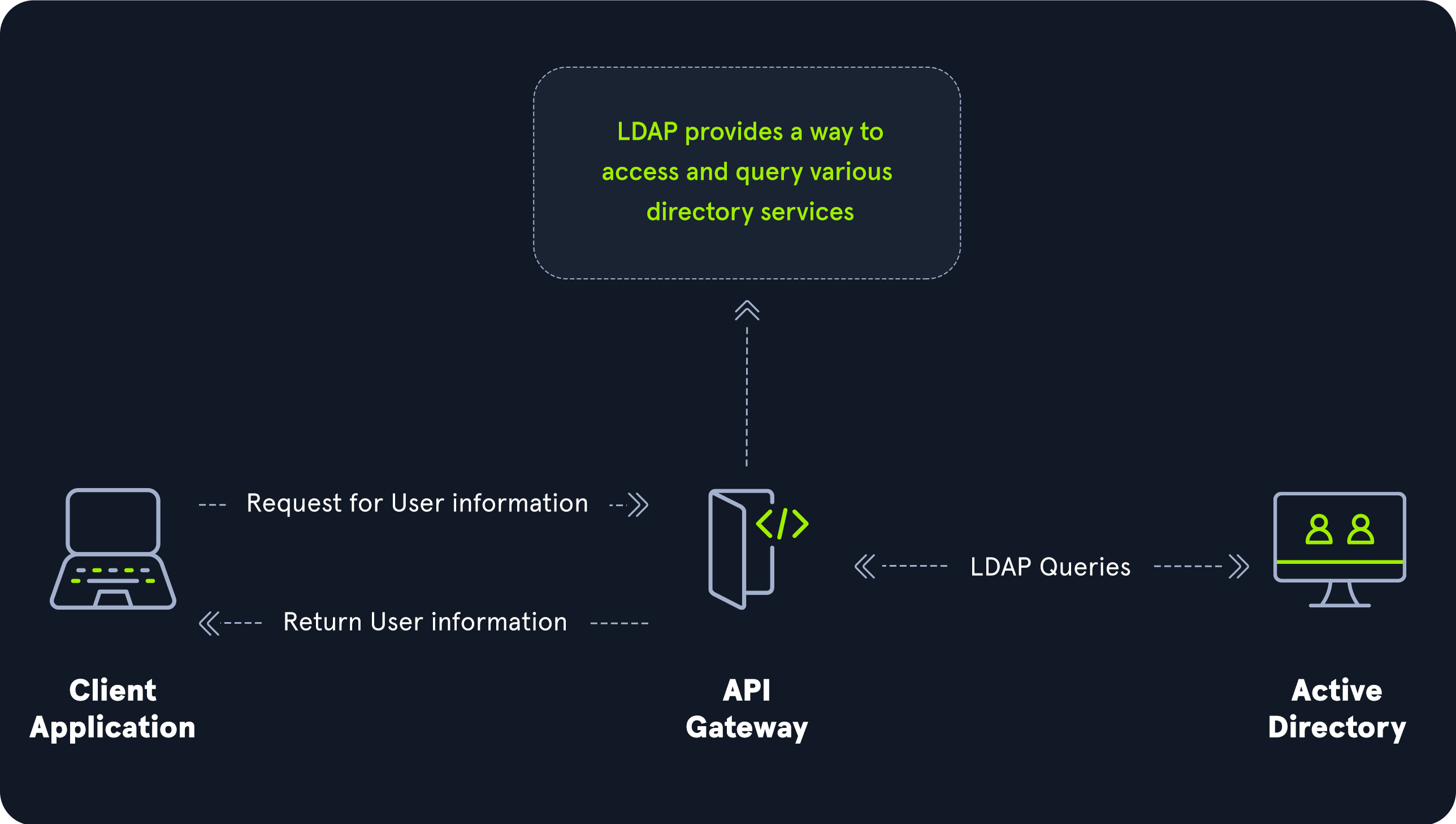
Active Directory supports Lightweight Directory Access Protocol (LDAP) for directory lookups. LDAP is an open-source and cross-platform protocol used for authentication against various directory services (such as AD). The latest LDAP specification is Version 3, published as RFC 4511. A firm understanding of how LDAP works in an AD environment is crucial for attackers and defenders. LDAP uses port 389, and LDAP over SSL (LDAPS) communicates over port 636.
MSRPC
MSRPC is Microsoft’s implementation of Remote Procedure Call (RPC), an interprocess communication technique used for client-server model-based applications. Windows systems use MSRPC to access systems in Active Directory using four key RPC interfaces.
| Interface Name | Description |
|---|---|
| lsarpc | A set of RPC calls to the Local Security Authority (LSA). Manages local security policy, audit policy, and interactive authentication services. Used to perform management on domain security policies. |
| netlogon | The Netlogon service handles authentication for users and services in a domain. Runs continuously on domain controllers to support logons and related domain operations. |
| samr | Remote SAM (samr) manages the domain account database (users, groups, computers). Administrators use it for CRUD on security principals. Attackers and pentesters can query it for rich reconnaissance; mitigations include restricting remote SAM queries to administrators. |
| drsuapi | The Directory Replication Service (DRS) Remote Protocol API used for replication tasks between domain controllers. Misused by attackers to replicate NTDS.dit and extract password hashes for Pass-the-Hash or offline cracking. |
NTLM Authentication
Active Directory uses several other authentication methods which can be used (and abused) by applications and services in AD. These include LM, NTLM, NTLMv1, and NTLMv2. LM and NTLM here are the hash names, and NTLMv1 and NTLMv2 are authentication protocols that utilize the LM or NT hash.
Hash Protocol Comparison
| Hash/Protocol | Cryptographic Technique | Mutual Authentication | Message Type | Trusted Third Party |
|---|---|---|---|---|
| NTLM | Symmetric key cryptography | No | Random number | Domain Controller |
| NTLMv1 | Symmetric key cryptography | No | MD4 hash, random number | Domain Controller |
| NTLMv2 | Symmetric key cryptography | No | MD4 hash, random number | Domain Controller |
| Kerberos | Symmetric key cryptography & asymmetric cryptography | Yes | Encrypted ticket using DES, MD5 | Domain Controller / Key Distribution Center (KDC) |
NTHash (NTLM)
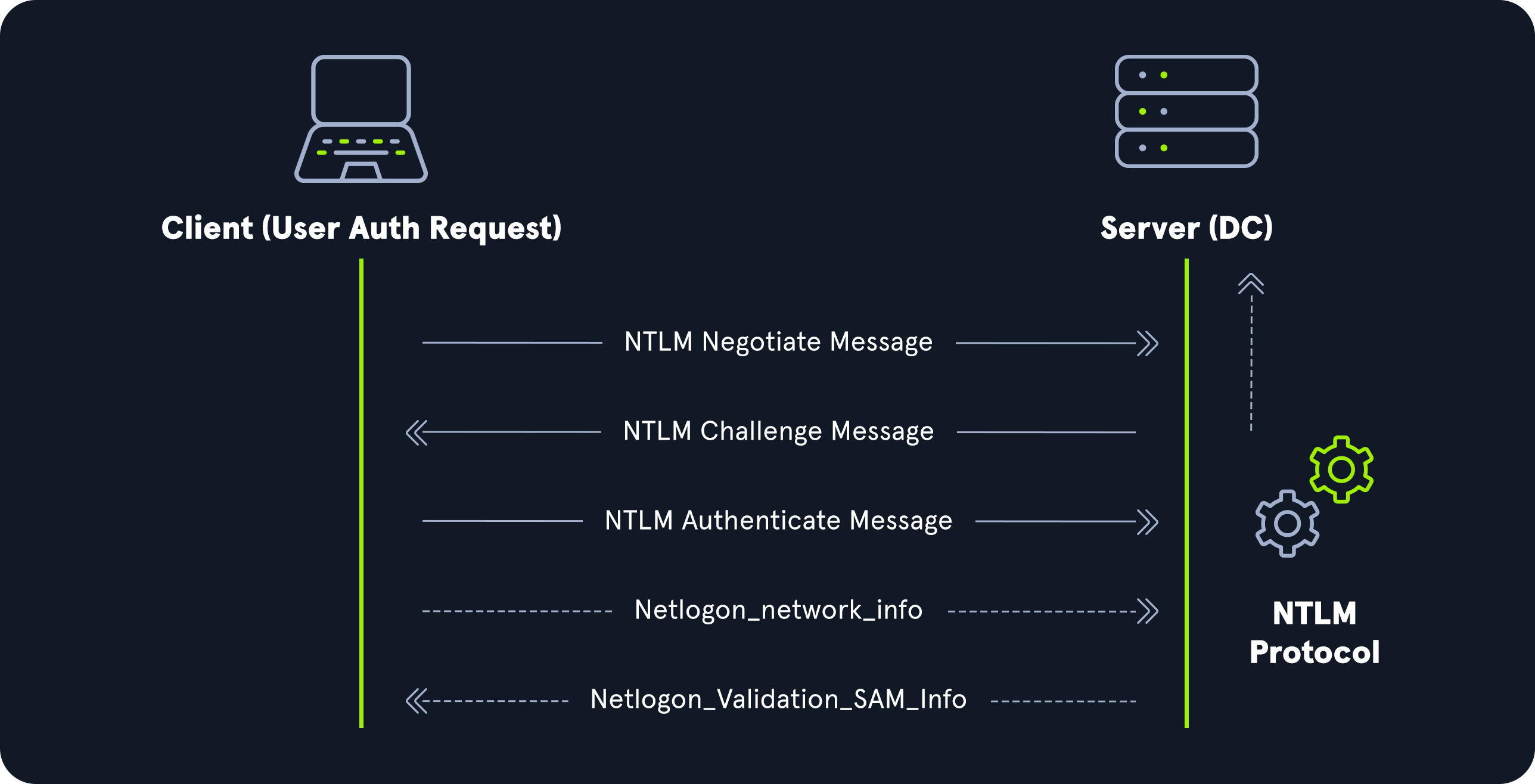
NT LAN Manager (NTLM) hashes are used on modern Windows systems. It is a challenge-response authentication protocol and uses three messages to authenticate: a client first sends a NEGOTIATE_MESSAGE to the server, whose response is a CHALLENGE_MESSAGE to verify the client’s identity. Lastly, the client responds with an AUTHENTICATE_MESSAGE. These hashes are stored locally in the SAM database or the NTDS.DIT database file on a Domain Controller. The protocol has two hashed password values to choose from to perform authentication: the LM hash (as discussed above) and the NT hash, which is the MD4 hash of the little-endian UTF-16 value of the password. The algorithm can be visualized as: MD4(UTF-16-LE(password)).
NTLM Authentication Request
Rachel:500:aad3c435b514a4eeaad3b935b51304fe:e46b9e548fa0d122de7f59fb6d48eaa2:::Looking at the hash above, we can break the NTLM hash down into its individual parts:
Rachelis the username500is the Relative Identifier (RID). 500 is the known RID for theadministratoraccountaad3c435b514a4eeaad3b935b51304feis the LM hash and, if LM hashes are disabled on the system, can not be used for anythinge46b9e548fa0d122de7f59fb6d48eaa2is the NT hash. This hash can either be cracked offline to reveal the cleartext value (depending on the length/strength of the password) or used for a pass-the-hash attack.